An Interactive World War I Lesson on the Western Front
Why was fighting in the trenches so difficult and deadly?
Turn your classroom into the Western Front with this low-prep, interactive WWI trench warfare simulation designed to help students understand one of the most important concepts of World War I: why trench warfare created a deadly stalemate.
Students don't just read about trenches—they experience a simplified version of the problem soldiers faced on the Western Front.
Using desks as trenches and paper balls as artillery shells, students participate in multiple rounds of simulated combat. Between rounds, they stop, reflect, analyze authentic WWI primary sources, and build an understanding of why soldiers struggled to break through enemy defenses.
The lesson moves from experience → observation → primary-source evidence → discussion → historical conclusion.
WHAT STUDENTS WILL EXPERIENCE
Students will:
Experience the life in the trenches
Explore the danger of crossing No Man's Land
Consider the impact of artillery and other WWI technology
Examine the physical conditions soldiers experienced
Analyze firsthand accounts from WWI soldiers
Compare experiences from 1916, 1917, and 1918
Connect battlefield conditions to the larger concept of stalemate
Use evidence from the simulation and primary sources to explain why trench warfare was so deadly
PRIMARY SOURCES INCLUDED
The lesson incorporates firsthand accounts from the National Archives:
Gilbert Williams — 1916
Students examine the dangers of attacking enemy trenches and connect his experience to what they just experienced in the simulation. (audio version)
Hugh Andrew Skilling — 1917
Students investigate the physical conditions of trench life, including mud, water, bombardment, gas, exhaustion, and the presence of bodies and dead animals.
Eugene Kennedy — 1918
Students compare a later American soldier's experience with what they have already learned and identify what stayed the same and what changed.
Presentation
Ready-to-project PowerPoint
Student-facing simulation directions
Battle round prompts
Primary-source prompts
Reflection and synthesis questions
MATERIALS NEEDED
Approximately 45–55 minutes
This makes an excellent:
WWI introduction
Trench warfare lesson
Interactive history activity
Primary-source lesson
Observation/evidence lesson
Alternative to a traditional lecture
THE BIG IDEA
By the end of the lesson, students should be able to explain:
Trenches gave soldiers a strong defensive advantage, while modern weapons made crossing No Man's Land extremely dangerous. As a result, attacks were difficult, casualties were high, and neither side could easily break through.
This isn't just a fun simulation.
Students have to use what they experience as historical evidence.
Perfect for:
U.S. History • World History • European History • 20th Century History • WWI Units • Grades 9–12
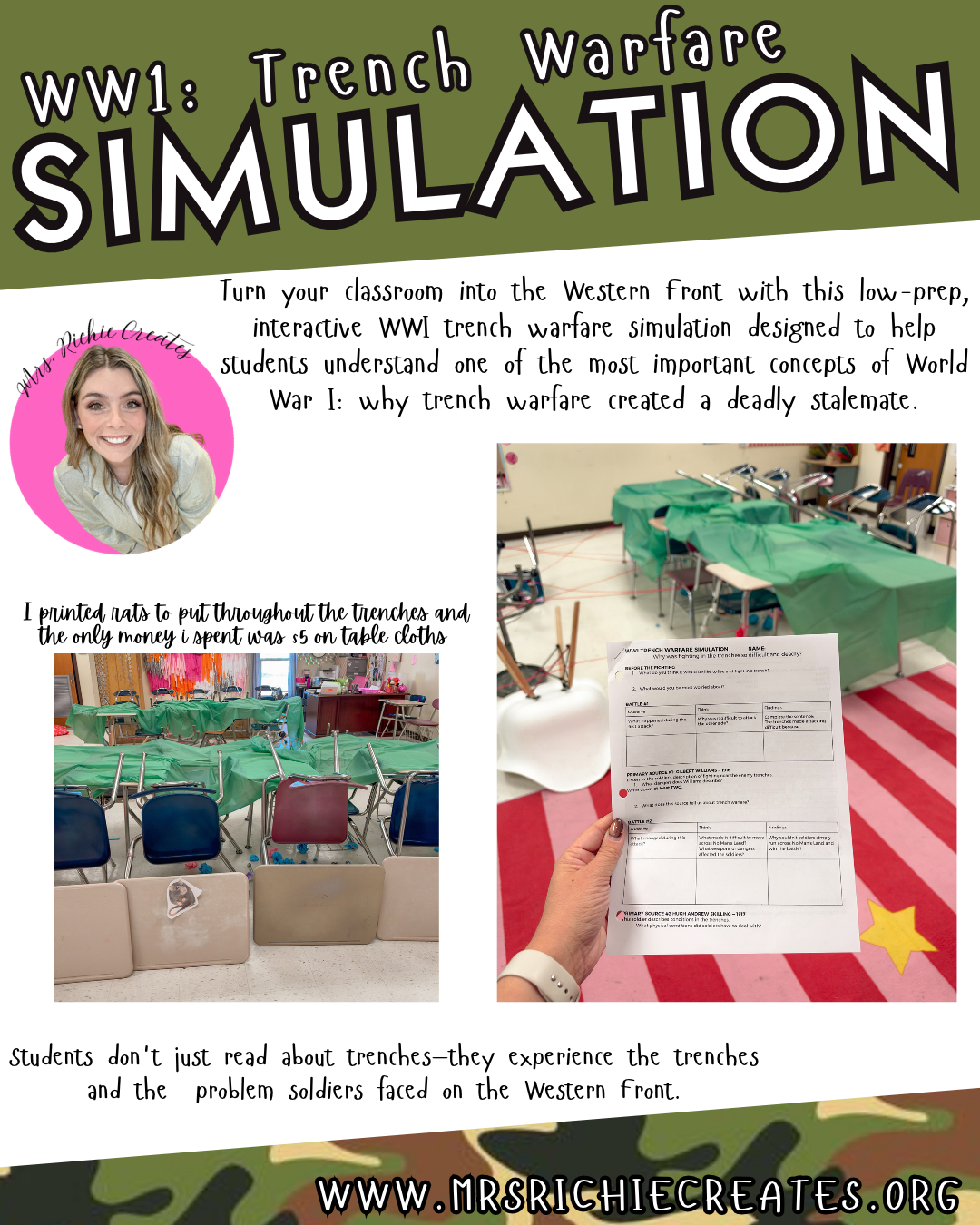 Image 1 of 2
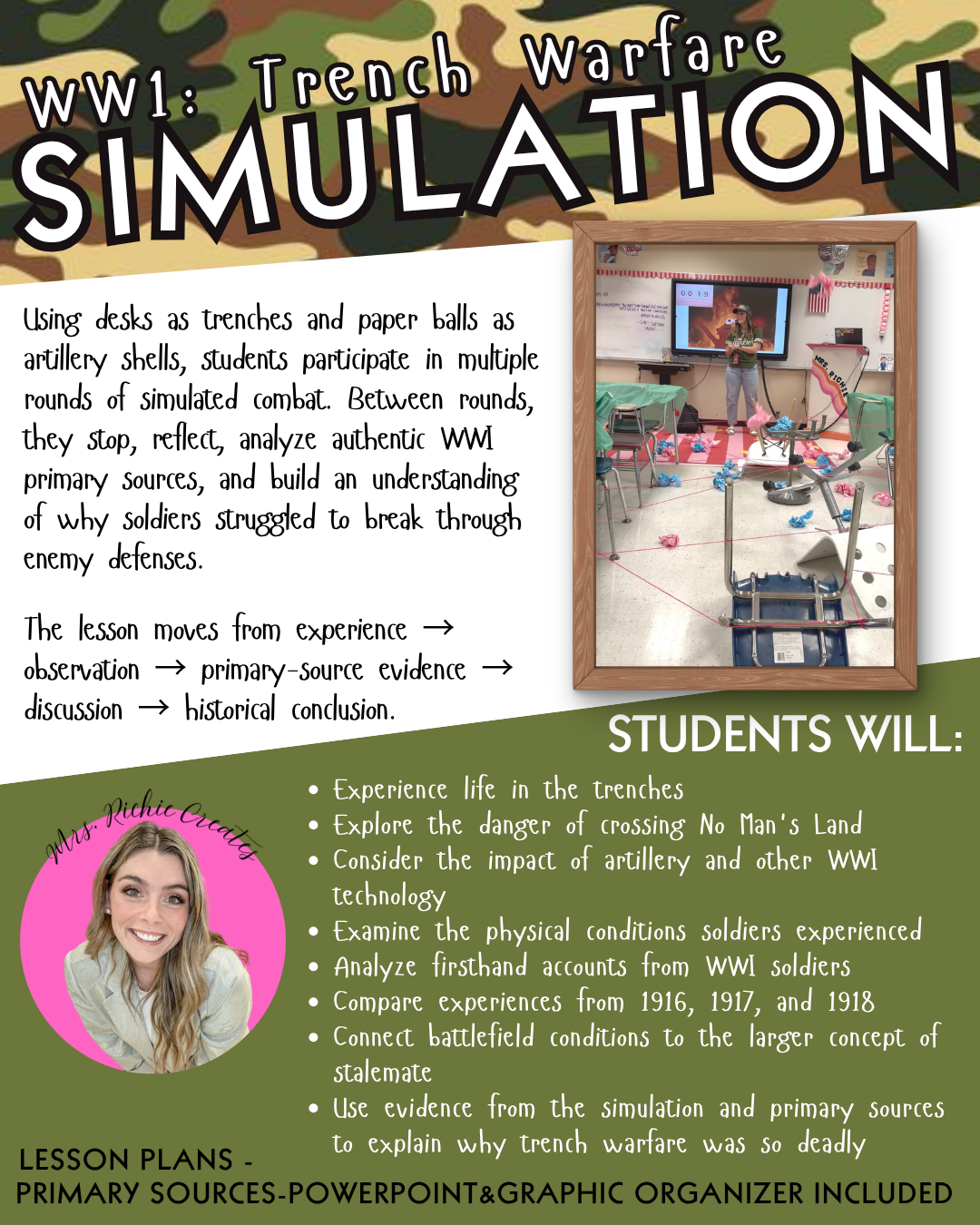 Image 2 of 2